
I vividly recall my initial visit to a casino, walking in with a roulette system I was convinced I’d cracked. The croupier offered me a polite smile, the wheel spun, and by the close of the hour my wallet was visibly thinner. That night taught me something more valuable than any betting strategy: the house edge isn’t some conspiracy—it’s a simple bit of maths that keeps the lights on and the cards shuffling. If you visit A1 Casino, or any UK-facing site for that matter, understanding this concept changes you from a hopeful punter into a player who understands precisely what they’re paying for. I’m going to explain to you the house edge in plain English, no calculator needed, so you can choose clear choices every time you log in. By the end, you’ll see that a small percentage doesn’t mean you can’t win; it just means you’ll understand the real cost of the thrill.
What Exactly Is the House Edge?
The house edge is the mathematical benefit the casino designed into every game. Imagine a tiny levy on each bet—over millions of spins, hands, or rolls, the operator will hold onto a predictable chunk of all the money wagered. There’s no trickery here; it’s set out plainly in the game rules. At A1 Casino, you can usually see the theoretical return percentage in the help files. So when I mention that European roulette carries a 2.7% house edge, I imply that for every £100 you bet, the casino expects to pocket £2.70 on average. That doesn’t mean you’ll lose exactly £2.70 every time you sit down. In the short term, variance can deliver you a fat profit. Over time, though, the maths works steadily in the casino’s favour. The word to keep in mind is “expectation”. One evening might defy the trend; a thousand evenings won’t. Understand this and you’ve taken the first step toward gambling responsibly and enjoying the ride without false hope.
The Impact of Game Rules on the House Edge
Minor rule tweaks can shift the house edge by a remarkable amount, and I’ve learned to identify them like a hawk. In blackjack, the count of decks, whether the dealer draws or stands on soft 17, and your ability to double after splitting all adjust the edge by portions of a percent. Those fragments stack up fast. The transition from European roulette to American roulette is the clearest example: one extra pocket almost doubles the casino’s advantage. Even in slots, features like bonus buys or gamble features can alter the effective RTP. At A1 Casino, I always read the game rules before playing a new title. A slot that allows you enter straight into the bonus round may appear generous, but the RTP on that feature could be smaller than the base game. The same reasoning holds for side bets at table games. That tempting Perfect Pairs wager in blackjack often packs a house edge north of 5%. I consider side bets as a distinct game, and usually one with poorer maths.
Single-zero vs. American Roulette

I can’t hammer this home enough: the shift from a single-zero to a double zero wheel is the biggest rule change you’ll ever encounter. On a European wheel, the house edge stands at 2.7%. On an American wheel, it climbs to 5.26%. Over the long term, that implies you’ll go through your bankroll nearly twice as fast on the American edition. Whenever I scan the live casino lobby at A1 Casino, I look for European or French roulette and nothing more. American wheels from time to time sneak in because they’re widespread in some markets, but for a UK player with alternatives, there’s no reason to tolerate the poorer odds. If you ever find a French roulette table with the “en prison” or “la partage” rule, seize it. That rule cuts the edge on even‑money bets to just 1.35%, which is remarkably good. It’s the gap between covering a fair price for your fun and being ripped off.
Blackjack Rule Changes
Blackjack is a real chameleon. The house edge can linger at a razor‑thin 0.4% or balloon to a chunky 2%, all depending on the table rules. I run through a mental checklist: does the table pay 3:2 or 6:5 for blackjack? Does the dealer stand on soft 17? Can I double down on any two cards, or only on 9, 10, and 11? Can I double after splitting? Does the table provide surrender? Every “yes” to a player‑friendly rule shaves a little more off the edge. At A1 Casino, the virtual blackjack tables usually show these rules right up front. I once took a seat at a table that paid 6:5 without noticing, and I could have kicked myself afterwards. That one rule alone added 1.39% to the house edge, negating all the gains from my basic strategy play. If you gather nothing else from this article, remember this: 3:2 payouts are non‑negotiable for anyone serious about blackjack.
Casino Advantage across Well-Known Casino Games
Roulette
Roulette demonstrates the house edge more obviously than other games, so I employ it as my educational tool. European roulette, with its single zero, offers the casino a 2.7% edge on nearly every bet. That’s totally fair. American roulette, though, adds a double zero and jumps the edge to 5.26%. If you’re at A1 Casino and spot both variants side by side, the decision is a no‑brainer. Some French roulette tables even offer the “la partage” rule: you obtain half your even‑money bet back if the ball stops in zero. That cuts the edge down to 1.35%, which is extremely player‑friendly. I always tell UK players to inspect the wheel layout before setting down a chip. A quick peek at the zero pockets tells you everything about the mathematical damage you’ll suffer over time. Unless you’re intentionally chasing higher risk and you acknowledge the added cost, steer clear of the American wheel.
Blackjack
Blackjack has a particular place for me because it can offer one of the lowest house edges in the casino—provided you play it correctly. The base edge can fall as low as 0.5%, but only if you adhere to basic strategy. Basic strategy isn’t card counting; it’s a set of numerically perfect decisions for every potential hand against the dealer’s upcard. When I launch a virtual blackjack table at A1 Casino, I have a strategy chart open on my phone until the choices become second nature. Depart from that chart and the edge climbs fast. Rule variations also have huge weight. A table that pays 3:2 for a natural blackjack is far ahead of one that pays 6:5, which alone contributes roughly 1.4% to the house edge. A dealer who stands on soft 17 also works in your favor. If you’re willing to learn one game inside out, choose blackjack. The effort pays back in real money saved.
Slots
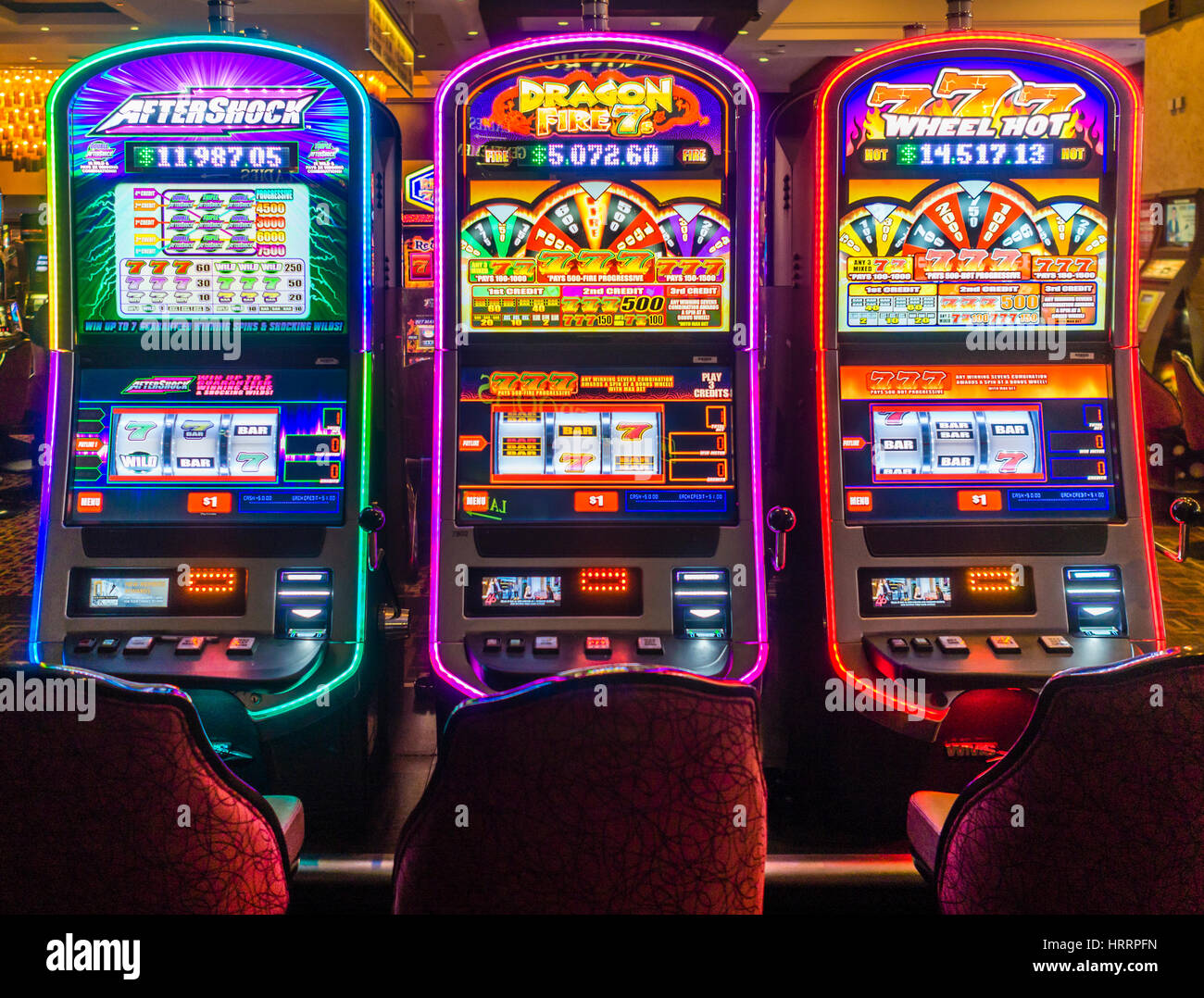
Slots are the untamed frontier of house edge, and I enter with my eyes wide open. A single spin can hold an edge anywhere from a lean 2% up to a bruising 10% or more, and unlike table games, you cannot change the outcome with skill. The RTP is built into the game’s programming and confirmed by independent labs. At A1 Casino, you’ll often find the RTP tucked in the game info section, and I’ve gotten into the habit of checking it before I dedicate my bankroll. High‑volatility slots can share the same RTP as low‑volatility ones, but they hand out fewer, fatter wins. That doesn’t alter the edge—it just changes the ride. I often gravitate toward slots with an RTP of 96% or higher, which provides a house edge of 4% or below. Anything under 94% appears needlessly steep to me. Progressive jackpots often carry a higher base edge because a chunk of each bet goes toward the jackpot pool. That’s the exchange for a shot at a life‑changing win.
Baccarat table
Baccarat the quiet overachiever among low-margin games, and I hope more UK players would give it a go. The banker bet has an edge of just 1.06%, while player sits at 1.24%. The tie bet, however, is a trap with an edge that can surpass 14%, and I always avoid it. The game calls for no skill, no decisions beyond where you put your chips, offering you a calm session from start to finish. At A1 Casino, the live baccarat tables are broadcast in high definition, and the pace feels pleasantly unhurried. Because the edge on banker and player is so low, your bankroll can stretch a long way, especially if you stick to flat betting. That 5% commission on winning banker bets is what generates the tiny edge, but even after the commission, it stays the best bet in the house. For pure mathematical efficiency, baccarat competes closely with blackjack—without ever making you to commit to memory a strategy chart.
Craps
Craps can frighten away a lot of UK players with its hectic layout and loud crowds, but tucked inside that chaos are some of the best bets you’ll find https://a-1.casino/. The pass line bet has a house edge of 1.41%, and once a point is set, you can cover it with an odds bet that carries exactly zero house edge. Yes, you heard that right: the casino takes no mathematical cut on odds bets, which is practically unheard of. At A1 Casino, the digital craps tables let you discover these wagers without the intimidation of a packed pit. The trick is to avoid the flashy proposition bets positioned in the centre of the table—those can have edges of 10% or more. Stick to pass line, don’t pass, come, and don’t come, and you’re taking part in a game that gives you a real fighting chance. I find craps surprisingly social, and once you grasp the rhythm, it’s considerably simpler than it first looks.
House Edge vs. Player Return
I encounter these phrases bandied about as if they’re the same thing, but they’re opposite sides of one coin. The house edge is the percentage the casino retains; RTP is what is paid back to players. So if a slot at A1 Casino shows an RTP of 96.5%, the house edge rests at 3.5%. Plain as that. The confusion arises because RTP is a hypothetical long‑term number—it’s no promise for your individual session. I’ve observed punters score big on a 94% RTP slot and take a bath on a 98% one in the identical evening. That’s volatility at work. What counts is that over hundreds of thousands of spins, the machine will pay back about 96.5% of all cash put in. Table games typically display the edge straight away. Blackjack can have a house edge of just 0.5% with optimal basic strategy, while American roulette slogs along at a thick 5.26%. Anytime you notice an RTP, just subtract it from 100% and you’ve obtained the edge. It may be the most helpful number you’ll ever come across.
Popular Myths Concerning the House Edge
I’ve come across some bizarre theories over the years, and debunking them is half the fun. The one that refuses to die is the idea that a game is “due” to pay after a long losing streak. The house edge doesn’t run on a cycle; every spin, hand, or roll is separate. The roulette ball has no memory, and the slot machine’s random number generator is impartial. Another chestnut suggests the casino can flip a switch and tighten a game from a distance. In the UK, games are scrutinized and certified to a rigorous standard. At A1 Casino, the software is reviewed and the RTP is fixed. The operator cannot adjust it on a whim. Having faith in hot and cold streaks is innocent entertainment, but mistaking it for a strategy is dangerous. I also hear people claim that betting systems can beat the edge. The Martingale, Fibonacci, and their relatives only change the pattern of wins and losses, not the underlying maths. No system can flip a negative expectation into a positive one.
- A slot machine that hasn’t rewarded all day is “due” to hit the jackpot.
- The casino can remotely alter a live game’s RTP while you’re playing.
- Betting systems like the Martingale can wipe out the house edge over time.
- Online games are fixed differently from their land‑based cousins.
- Play long enough and you’re bound to claw back all your losses.
Locating Low House Edge Games at A1 Casino
Searching the A1 Casino game library with the house edge in mind is a skill that benefits you right away. I start by filtering for table games, then I dig into the specifics. For slots, I hunt for the information icon—usually a little ‘i’ or a menu button—that pulls up the RTP. If a game conceals its RTP, I might still spin for fun, but I won’t put down serious cash without understanding the numbers. Live casino games often display their rules right in the lobby. I search for “European Roulette,” “Blackjack 3:2,” and “Baccarat Squeeze” as my go‑to low‑edge picks. The search bar is your helper; entering “low stakes blackjack” or “French roulette” can uncover hidden gems. I also watch for new game releases. Providers sometimes roll out titles with promotional RTPs to attract players, and those windows are worth taking. The trick is to make checking the edge as automatic as peeking at your balance.
Review the Game Information Panel
Every trustworthy game at A1 Casino comes with a included information panel, and I handle it the same way I’d read a nutrition label. A handful of taps or clicks will show you the estimated RTP, the volatility, and often the maximum win. I’ve made a habit of checking it before my first spin. If I see an RTP below 95%, I ask myself whether the fun factor really covers the greater cost. Sometimes it does—a popular branded slot packed with features can justify it—but I go in with my eyes wide open. The panel also indicates special features that can shift the edge, like gamble options or progressive jackpot contributions. I especially like it when the panel breaks down the RTP contribution of the base game versus the bonus round. That kind of openness lets me figure out if the bonus buy feature is worth the price. Information is power, and in a casino, it’s also money kept in your pocket.
Employ Reliable Low‑Edge Variants
I maintain a curated list of games I come back to over and over because their house edge keeps reliably low. European roulette, standard blackjack with 3:2 payouts, baccarat banker bets, and pass line craps reddit.com stand at the core. At A1 Casino, I save these for quick access. When the mood for slots arises, I gravitate toward titles from developers with a name for high RTPs—think of certain NetEnt or Play’n GO classics that rest above 96%. I sidestep side bets unless I’m feeling flush and viewing them as a separate entertainment expense. The real beauty of this approach is that I never end a session feeling cheated. I know the maths, I acknowledge the cost, and any win arrives like a genuine bonus. It transforms gambling from a hopeful scramble into a calculated leisure activity. The casino still earns its money, and I maximise every pound into the longest playtime possible.

Why the House Edge Exists
Casinos operate as businesses, not charities. The house edge represents their revenue model, the same way a supermarket applies a margin to a pint of milk. Without this edge, you wouldn’t have upscale establishments, live dealer streams streaming to your phone, or the sign-up bonuses you see at A1 Casino. Friends occasionally feel cheated when I describe this, but I ask them to consider the flipside: if the odds were perfectly balanced, the operator would go bust as soon as a lucky streak hit. The edge is what keeps the doors open so you can play tomorrow, next week, and next year. It pays the developers who build those slot animations, the croupiers who greet you by name, and the security teams who protect your data. Here in the UK, we enjoy some of the strictest gambling rules anywhere, and the house edge is never hidden. You can always find the RTP (Return to Player) percentage, which is just the opposite face of the edge. A 96% RTP means a 4% house edge. That’s simple arithmetic, nothing dark or sinister.
Using the House Edge to Bet Smarter
Understanding the house edge isn’t about transforming pro; it’s about squeezing the most entertainment out of your bankroll. I fix a budget before I log into A1 Casino, then I select games whose edge aligns with how long I want to play. With £100 and a full evening ahead, I’ll go for blackjack or baccarat with low flat bets, so the maths has less chance to gnaw through my funds. If I’m after a quick adrenaline jolt, I might move a smaller slice into a high‑volatility slot, knowing full well the edge is steeper. The edge also assists me assess bonuses. A welcome offer with a 35x wagering requirement tied to a high‑edge slot is far more expensive to clear than the same requirement on a low‑edge blackjack game—though plenty of bonuses heavily cap table game contributions. I check the fine print. In the end, the house edge is just a instrument for smarter decisions. It won’t assure wins, but it does mean you’ll never be blindsided by a loss.
- Establish a strict budget, then break it by the house edge to get a rough idea of your expected playtime.
- Pick the lowest‑edge games for longer sessions; save the high‑edge titles for short, high‑risk bursts.
- Always verify the RTP or house edge in the game info panel before you put a bet.
- Treat side bets as separate wagers with their own (usually worse) mathematics.
- Use bonuses on games where the edge is lowest to get the most value out of wagering requirements.
The method the House Edge Gets Calculated
You don’t need a statistics degree to understand the maths. I always start with a coin toss. If I offered you even money on a fair flip, the house edge would sit at zero—because heads has exactly a 50% chance, and the payout matches the true odds. Imagine I pay you 95p for every £1 you bet on heads, and I keep your stake when you lose. True odds say you should get £1, but I’m shorting you by 5p. That 5p gap, divided by the total amount wagered, yields a house edge of 5%. Casino games work on the same principle, only with trickier probabilities. In roulette, the zero pocket is the culprit. A bet on red pays even money, but your chance of hitting red on a European wheel is 18 in 37, thanks to that single green zero. The payout falls one unit short, creating a 2.7% edge. Every game has its own mathematical skeleton. Once you see it, you can compare games with the precision of a surgeon.
How the House Edge Should Not Frighten You
I’ve come across numerous players who, the minute they find out about the house edge, think the games are rigged. I tell them they’re covering the cost of an experience, just like a cinema ticket or a dinner out. The edge is the fee you pay for the thrill, the suspense, and the sporadic rush of a big win. more content At A1 Casino, that price is out in the open and often very fair. A 1% edge on blackjack means your theoretical cost amounts to £1 for every £100 you wager. Contrast that to the markup on a pint at your local, and all of a sudden the casino starts to look like decent value. The trick is under no circumstances to bet money you can’t manage to lose and to view the edge as an entertainment fee. When I enter that headspace, I enjoy the games more and go after losses far less. The house edge isn’t your enemy; it’s the rulebook. Learn it, respect it, and you’ll have a far healthier relationship with every bet you make.
I wrote this guide because I truly believe an informed player has more fun. The house edge is the sole important concept in any casino, and the moment you truly get it, you stop wandering and start choosing. At A1 Casino, the tools are placed right there in the game lobbies, prepared for you to pick them up. Look at the RTP, select the European wheel, stick to basic strategy, and the whole experience transforms. You’ll still lose sometimes—maybe often—but you’ll know exactly why and how much it’s costing you. That knowledge is freeing. So the next time you log in, take thirty seconds to peek at the numbers. Your bankroll will appreciate you, and you might discover the games become a whole lot more fun when the mystery falls away.