
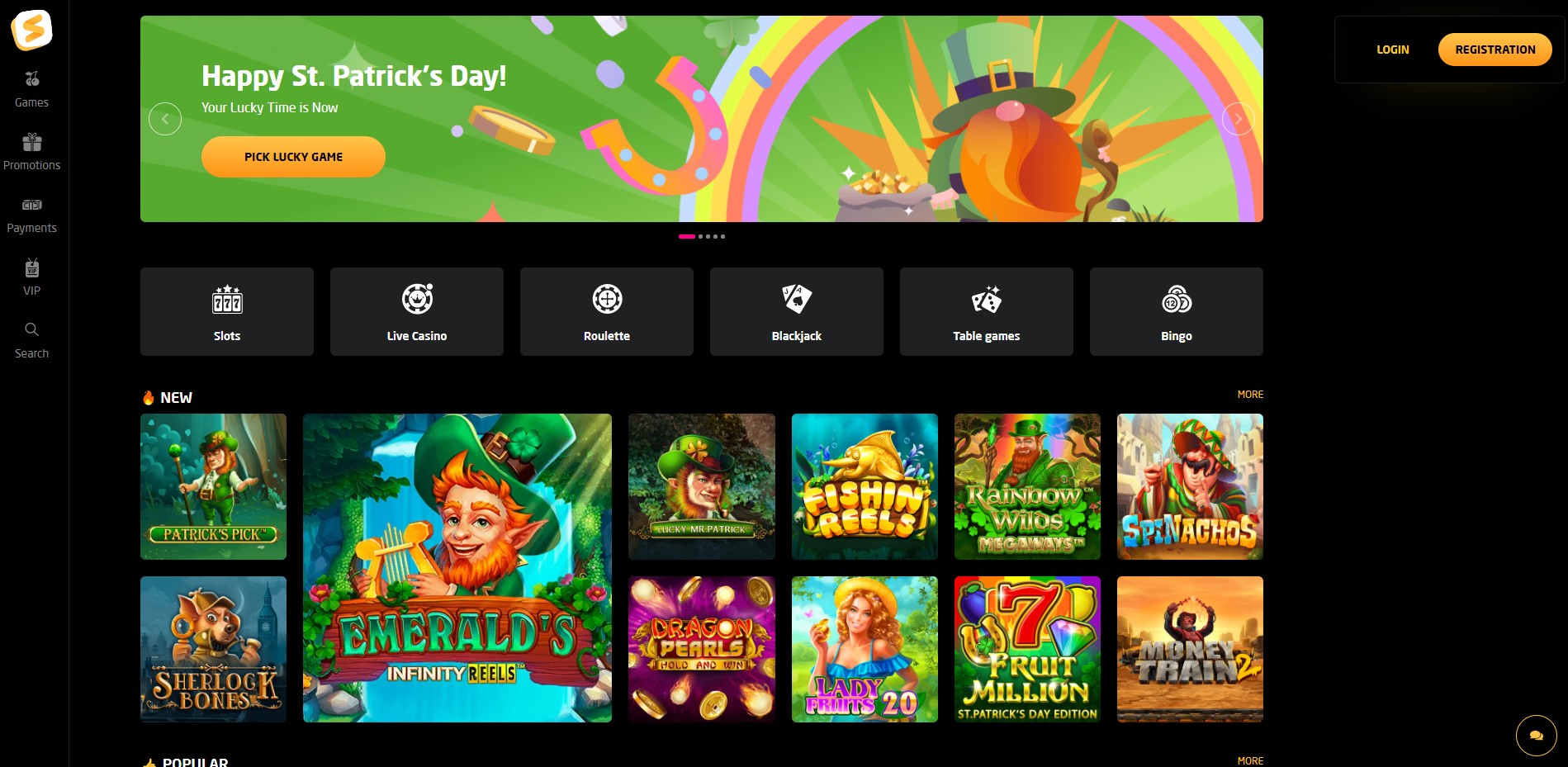
The modern online casino environment offers far more than entertainment and the chance of a win. For the attentive player, casino stay accesso membri, it provides a variety of built-in tools designed to maintain a balanced relationship with gambling. Among these, the reality check emerges as a quiet yet strong mechanism. Across Italy, where the Agenzia delle Dogane e dei Monopoli upholds strict responsible gaming protocols, this feature is not a mere afterthought. It functions as a planned interruption, indicating precisely how long a session has lasted and how much money has moved in either direction. Smart players increasingly view these reminders not as annoyances but as tactical pauses that maintain the experience transparent and balanced.
The way Stay Casino Deals with Reality Checks and Player Safety
Stay Casino, operating under a full ADM license for the Italian market, has developed its responsible gaming toolkit around clearness and user control. The reality check function on the platform is immediately accessible from the account settings, with no confusing submenus. Players can pick intervals varying from 30 minutes up to the regulatory maximum, guaranteeing flexibility for both short, sharp sessions and longer strategic play. When an alert fires, it overlays the game screen with a clean, readable summary that features session duration, total wagered, net result, and a direct link to the responsible gaming page. The design steers clear of aggressive alarmism; instead, it presents the facts calmly, respecting the player’s intelligence.
Beyond the popup itself, Stay Casino merges the reality check with other protective measures. The platform permits users to set simultaneous deposit limits and cooling-off periods immediately from the same settings panel. This holistic approach signifies that a player who responds to a reality check by deciding to pause can enact a time-out immediately without requiring to navigate away from the game environment. For the Italian audience, who prize both regulatory compliance and seamless digital experiences, the casino’s implementation strikes a balanced note. It serves as a practical demonstration that operator profitability and player welfare can co-exist when the responsible gaming infrastructure is regarded as a core feature, not a bureaucratic checkbox.
The current Regulatory Landscape for Reality Checks across Italy
Italy maintains a unique position in the European gambling framework. The ADM, which regulates all legal gaming activities, has built a regulatory environment that places player protection at the forefront. Since the liberalization of online gambling, a series of decrees have mandated that every licensed operator must include reality check functionalities. These requirements are not superficial; they dictate that alerts must appear at intervals no longer than every hour of continuous play. Casinos that fail to conform risk major penalties and the loss of their license. This legal backdrop signifies that for any Italian-licensed platform, the reality check is a core layer of compliance, not an extra bonus.
The practical effect for players is standardization. Whether an individual chooses Stay Casino or any other ADM-approved site, they can expect a baseline standard of time and spend reminders. However, the quality of implementation diverges. questa fonte Some operators merely satisfy the minimum legal requirement with a generic popup, while others build comprehensive responsible gaming suites around the concept. The ADM’s rules also mandate that the information presented be clear and prominently displayed. For the Italian audience, this regulatory certainty guarantees that reality checks are a dependable tool. They function because the state has established that informed play is a right, not a privilege, and because continuous gambling without interruption poses a recognized risk to public health.
What Specifically Is a Casino Reality Check?
A casino reality check is a computerized notification that appears on screen after a predetermined period of continuous play. Its purpose is clear: to show the user with an accurate snapshot of the session so far. The popup typically displays the elapsed time since logging in, the total amount wagered, the sum of wins, the sum of losses, and the net result. Every figure is pulled right from the platform’s transaction logs, leaving no room for personal memory or selective recall. The player must actively close the message before resuming any game. This mandatory break, even if only a few seconds long, is enough to restore conscious decision-making into what can if not become a highly automatic activity.
At its core, the reality check serves as an impartial observer. It does not suggest, restrict, or judge. It only states. For someone who has been spinning slots or playing live table games for an hour, the alert might expose that time has passed faster than expected or that a budget has been stretched further than intended. In the Italian market, where licensed operators such as Stay Casino incorporate these tools by regulatory requirement, the feature has evolved into a polished component of the user interface. It appears seamlessly, often with a serene design, and encourages the player to either continue responsibly or to log off and return another day.
How Smart Players Configure Their Reality Check Settings
Skilled gamblers know that the default settings are a foundation, not a destination. The best application of a reality check stems from personalization. A smart player will first evaluate their usual playing time and mean cost per hour. If the intention is to play for 45 minutes, configuring a reminder at 30 minutes offers a useful intermediate checkpoint. This fine-tuned management, when available on a casino like Stay Casino, lets the gambler to obtain a recap before the gaming period ends, allowing for a timely change if needed. The goal is not to rely solely on the greatest allowable time, but to develop a routine that aligns with one’s own individual restraint habits.
Customization also extends to the mental framing of the alert. Some players combine reality checks with strict spending caps, using the notification to check against current spending with the available funds. Others treat the alert as a cue to log the findings in a simple logbook or phone memo. By acting this way, they turn the reality check from a static alert into an dynamic piece of information. This habit creates a long-term picture of real gaming behavior, free from the distortions of selective memory. In the Italian environment, where safe gaming features are readily available, the gap between a occasional player and a systematic user often lies in this inclination to customize notifications to serve a individual approach rather than just accepting the factory defaults.
The Mental Advantages of Duration and Cost Alerts
The mental science behind reality checks is grounded in the concept of cognitive interruption. When a person is immersed in a game, the prefrontal cortex, handling long-term planning and impulse control, can become dampened compared to the brain’s reward centres. A unexpected, objective summary of time and money acts as a circuit breaker. It transitions the brain back into an evaluative state, where decisions are made with full awareness rather than on autopilot. Research on comparable mechanisms in other digital environments shows that even brief pauses substantially reduce the likelihood of regretful choices. For an Italian player who might be mixing a live blackjack session with a casual evening, this pause upholds the entertainment value while protecting the wallet.
Additionally, these alerts counter two powerful cognitive biases: loss chasing and the sunk cost fallacy. When a player sees that they have spent two hours and a predetermined amount, the factual display neutralizes the emotional urge to simply keep going until the original balance is recovered. The alert delivers a concrete reason to step away, which is psychologically easier to accept than an internal resolution. Over time, regular exposure to reality checks trains the mind to self-monitor even without the popup. Smart players note that they begin to develop an internal clock and a sharper sense of their financial flow, effectively integrating the discipline that the software initially provided.
FAQ
What exactly is the preset reality check period on Italian casino sites?
Under ADM rules, the highest permitted gap before a reality check appears is 60 minutes of uninterrupted play. Many platforms set this as their default, which means a player receives an automatic overview of their session time and financial activity right one hour after logging in. Some operators, including Stay Casino, also offer the choice to select smaller gaps, such as 30 or 45 minutes, from the responsible gaming settings panel.
Are reality checks be deactivated completely?
In the Italian regulated market, a total disabling of reality checks is not permitted by law. The ADM stipulates that all licensed operators are required to show these alerts at least once per hour. Players can in some cases delay or close a particular notification for that specific session, but the feature itself cannot be forever disabled. This rule ensures that every user receives frequent, truthful information on their gambling activity, maintaining a basic level of player protection.
Are reality checks required for all types of casino games in Italy?
Certainly, the requirement extends widely across all segments available through a licensed operator. If a player engages in online slots, live dealer table games, poker, or sports betting, the platform must track continuous activity and initiate reality checks as needed. The only exception could be certain skill-based or tournament formats where real-time tracking is a bit different, but for the overwhelming majority of games an Italian user enjoys, the hourly alert is a consistent safeguard embedded in the software.
Do reality checks apply to live casino games?

Live casino sessions are part of the same monitoring framework. The system tracks the time spent across live blackjack, roulette, or baccarat tables in the same way it monitors RNG-based games. When the interval expires, the alert appears over the live stream. This is highly significant because the engaging, real-time nature of live dealer environments can make hours seem like minutes, making the factual interruption a useful tool for maintaining perspective during an thrilling live session.
How exactly do reality check tools help prevent problem gambling?
Reality checks act as early intervention moments. By displaying exact figures on time and money spent, they counter the distorted perception that often develops during extended play. This data-driven prompt can prevent a minor loss from escalating into a pursuit cycle. Over repeated sessions, the regular reminders help players build internal awareness and self-control routines. While not a treatment for gambling disorders, reality checks form a key component of a prevention ecosystem that includes deposit limits, self-assessment tests, and access to professional support resources.
Can the reality check message be customized on platforms like Stay Casino?
The message content itself is generally uniform to show essential details: session duration, total wagered, net result, and a link to responsible gambling tools. Players cannot modify the data fields or the core message, as these are designed for accuracy and regulatory compliance. However, users at Stay Casino can select the frequency of the alert and, in some cases, select a preferred notification style between a full-screen overlay or a smaller banner, ensuring the interruption remains informative without being overly bothersome.
Why Reality Checks Are Important in the Italy’s Online Casino Scene
The Italian gambling community is varied, spanning recreational sports bettors, seasoned card players, and a quickly growing number of mobile slot fans. In such a diverse landscape, the reality check serves as a shared anchor. Italy has one of the highest smartphone penetration rates in Europe, which makes casino access highly convenient. This convenience, while helpful overall, can dissolve the natural boundaries that once existed between a dedicated trip to a physical venue and an routine moment on the sofa. A reality check reintroduces that boundary electronically. It reminds the individual that even though the casino is in a pocket, the movement of money and time obeys the same real-world rules.
Moreover, the Italian cultural attitude toward leisure and family time often appreciates the idea of limits. Extended digital sessions can interfere with social rhythms. A properly scheduled alert at the 60-minute mark can nudge a player toward the dinner table or a responsibility that would otherwise be forgotten. Beyond the personal dimension, these tools also strengthen the broader market integrity. When players believe that the platform will act with factual summaries, they are more likely to participate sustainably. For operators like Stay Casino, which cater specifically to the Italian audience, demonstrating this care through robust reality check implementation directly fosters a healthier brand reputation and a more solid customer base.